In person in St. Petersburg
English, Russian
14.09.2026 – 18.09.2026
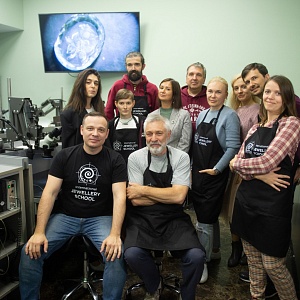
Course photos



Course programme
Required skills: for professional jewellers only
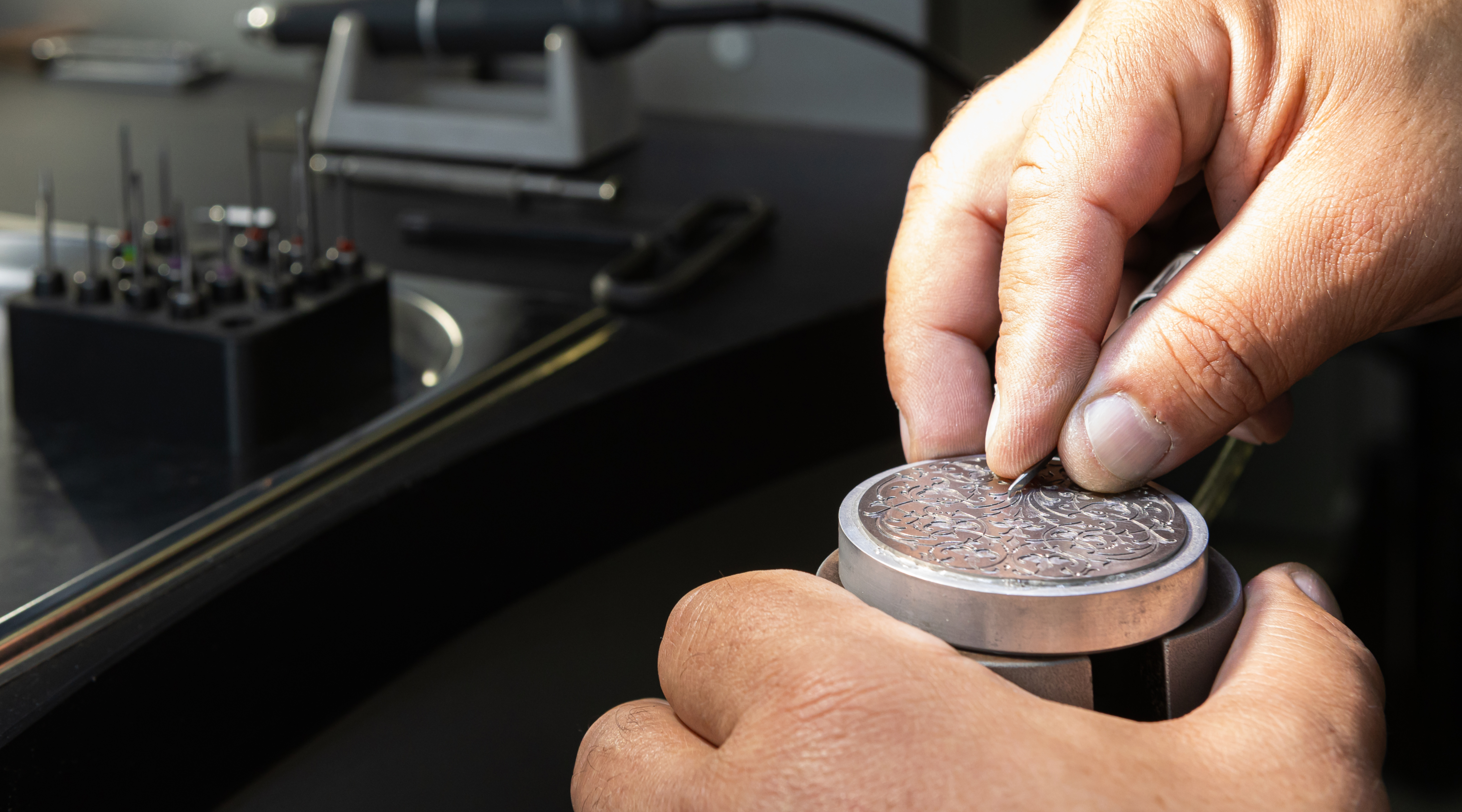
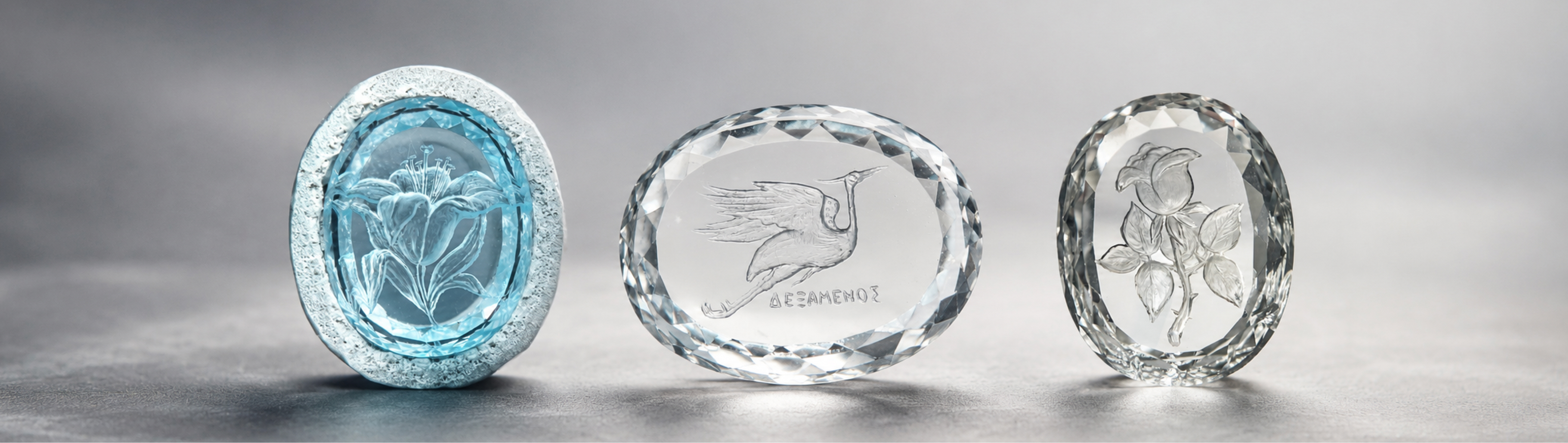
The course covers the signature aspects of intaglio carving on transparent stones
This signature course runs 1-2 times a year; if it is not in the current schedule, leave a request with the sales team
Course programme:
- •Introductory talk
- •Working with the design.
- •Making a working mandrel*. Preparing the stone for work**
- •Cutting the design contours into the stone
- •Creating the relief: removing the bulk with diamond tools
- •Coarse grinding with loose abrasive
- •Correcting the design on the stone
- •Grinding the details, working with loose abrasive
- •Correcting the design on the stone
- •Fine detailing of the relief
- •Final finishing of fine details
- •Selective polishing of the relief
- •Removing the stone from the mandrel and cleaning
- •Grinding and polishing the working surface
*Ready-made mandrels can also be used
** Coating the working area of the stone with corrector. Marking the stone for the design and applying it.
All materials and gravers are included in the price.
This course is right for you if

No special skills required - suitable for beginners and experienced makers alike

You work with jewellery and want to master intaglio carving on transparent stones

You want to improve your carving precision and reach the premium level

You want to shorten the path to results, avoid typical mistakes and start applying refined techniques right away - without long trial and error
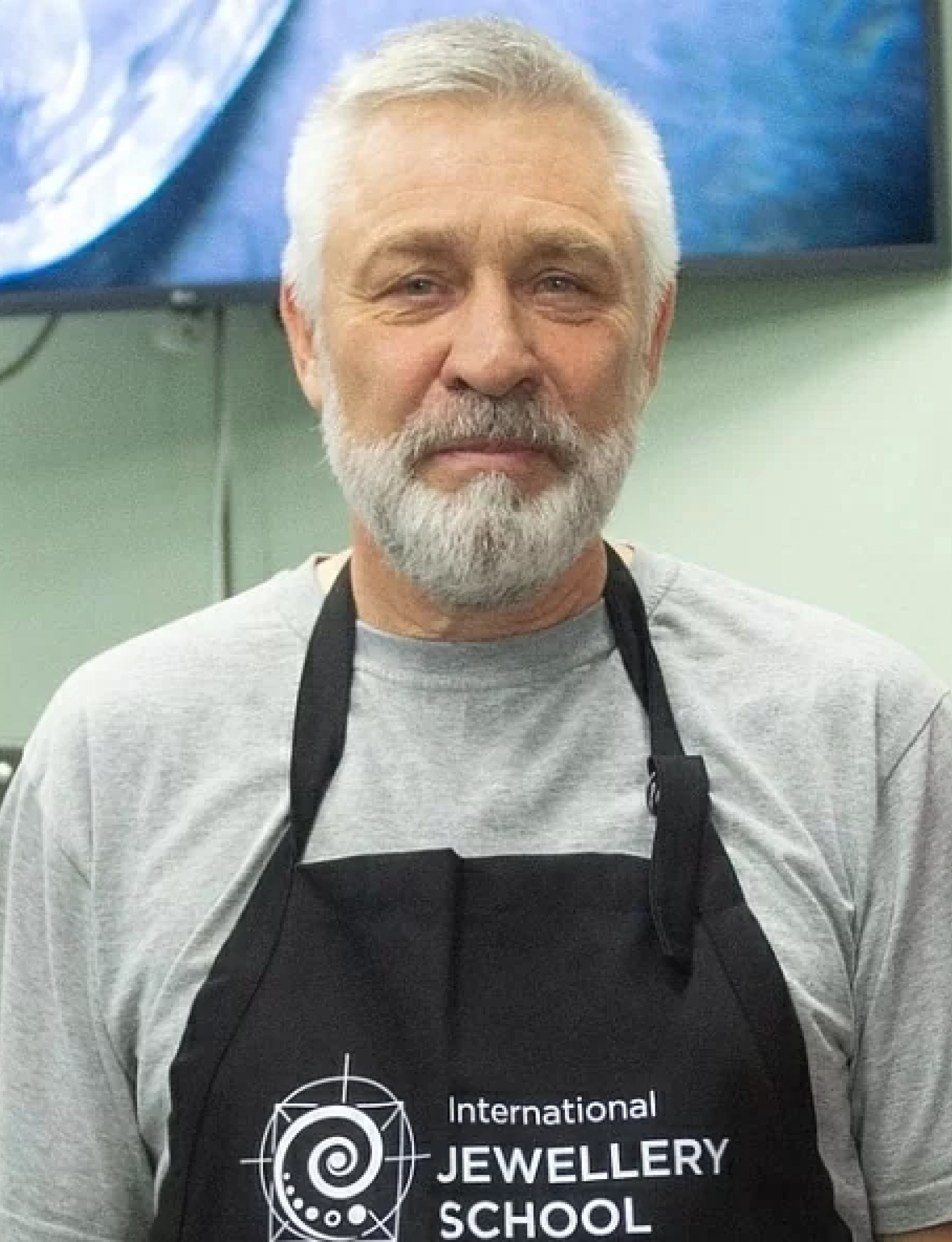
Born in 1962 in Michurinsk, Vladimir Popovich began studying art at age 10 under Arkady Plotitsyn, who taught him to "see the world." Despite his artistic inclinations, he became a geologist (Geological Prospecting Institute) and worked in Kazakhstan (uranium, gold), wh ere he discovered stone carving in Stepnogorsk.
Initially treating stones as raw ore, he gradually became fascinated by their beauty. Starting with cabochons, he mastered engraving techniques after receiving a drill from a friend. Inspired by ancient intaglios (like Dexamenos of Chios' "Heron") and Renaissance crystal carvings, he began creating miniature artworks on topaz, beryl, and even diamond.
He trained at the "Vikart" workshop (V. Kuzmishchev, E. Koroleva), learning micromosaic techniques. His key mentors were V. Malyasov and A. Tenzo. His philosophy: "To reveal the truth hidden within the stone." He compares carving to "building a Gothic cathedral"-demanding patience and vision when working with ultra-hard materials.
Legacy: Popovich transforms stones into "paintings"-from whimsical to profound-bridging science and art through timeless craftsmanship.
- Based: Russia
- Education: Intaglio artist
- Experience: <p>Vladimir Popovich: from geology to the art of stone</p><p><br></p><p>Born in 1962 in Michurinsk. At the age of 10 he began studying drawing with Arkady Plotitsyn, who taught him to "see the world". Despite his passion for art, he became a geologist (Institute of Geological Prospecting). He worked in Kazakhstan (uranium, gold), where in Stepnogorsk he gained access to a lapidary workshop. </p><p><br></p><p>At first he treated stones as ore, but later fell in love with their beauty. He started with cabochons, then mastered carving. A friend gave him a rotary tool, with which he first engraved glass. Inspired by ancient intaglios (such as "The Heron" by Dexamenos of Chios) and the carved crystals of the Renaissance, he began creating miniatures on topaz, beryl and even diamonds. </p><p><br></p><p>He worked at the "Vikart" workshop (V. Kuzmishchev, E. Koroleva) and studied micromosaic. He considers V. Malyasov and A. Tenzo his main teachers. His philosophy: "To reveal the truth held within the stone". He compares carving to "building a Gothic cathedral" - painstaking work with hard materials that demands patience and vision. </p><p><br></p><p>The result: Vladimir Popovich turns stone into "paintings" - from humorous to profound subjects, uniting science and art.</p>
Payment
Payment terms are the same for all courses. You can clarify the details with a manager when submitting your application
Send a requestPayment options
- 100% or 50% prepayment
- Via a payment link or an invoice
- Instalment plan via the school (on request)
- Gift certificate
How payment works
- Contact us and we will send you a payment link
- The receipt and confirmation arrive by email
- Want to study later? Send a request now - and pay later
What happens after payment
- Your place on the course is secured
- You will receive an email with the details and a list of what you need to start
- Online access (if you chose the online format) opens closer to the start date
Who can study at International Jewellery School?
The school is open to everyone, regardless of age, education or experience. We work with a wide range of students:
- Complete beginners - people who have never held a jeweller's tool but want to learn the profession from scratch. For them we run a preparatory course on the pneumatic graver: in 5 days it lays the foundation - correct posture, hand positioning, working under the microscope and the first metal-carving skills. After this course a student can already try their hand at simple work.
- Aspiring jewellers and students of specialist universities #ИМЯ?
- Practising masters with experience - jewellers, engravers and stone setters who work in workshops or run their own brands. They come for new techniques (such as high-polish engraving), to deepen their stone-setting knowledge, and for the chance to work on world-class equipment not found in ordinary workshops.
- Professionals from related fields - designers, sculptors, restorers and watchmakers who need jewellery skills to broaden their competencies or create original signature pieces.
- International students - the school welcomes students from any country. Classes can be taught in English, and the cultural programme makes the training an enriching journey as well.
There are no rigid entry requirements - we match the programme to each student's current level. Before the course starts you can consult our sales team to find out which course is best for you.
What training directions are available?
The school's programmes fall into three main directions:
- Direction 1. Stone setting
A fundamental jewellery specialisation, in demand at any production facility. - Direction 2. Engraving
Engraving is the art of creating designs and patterns on metal. The school teaches techniques from basic to highly specialised. - Direction 3. Jewellery techniques
This direction brings together highly specialised signature courses taught by guest masters from Russia and Europe. All programmes are aimed at a professional level and run in English and Russian.
What equipment is used for training?
Training is conducted on professional GRS equipment - the world leader in jewellery production technology. The school's studios are fully equipped: ergonomic benches, orthopaedic chairs, professional optics and hand tools.
Who teaches at the school?
Our instructors - true professionals who have trained more than 1,800 specialists from many countries. Among them are school founder Roman Karakurkchi and Vladimir Plakhov, a jeweller and engraver who has devoted many years to the art of engraving. The school also regularly hosts courses by guest masters from Russia and Europe.
How much does the training cost?
The price depends on the course you choose:
- Preparatory course on the pneumatic graver — 90 000 ₽
- Professional stone setters' training course - 390,000 ₽ (group of at least 5 people)
- High-polish engraving and lettering techniques — 200 000 ₽
- Jewellery technique courses - from 80,707 ₽ to 110,000 ₽ depending on the programme
All necessary materials and gravers are included in the price of every course.
What format do the classes take?
Training takes place in person in St. Petersburg, and twice a year in Dubai and Lisbon. Students can practise outside class hours - arriving earlier and staying later. Classes are led by the school's senior instructors, and courses are available in Russian and English.
What will I get after finishing the course?
Every graduate receives:
- A course completion certificate
- Ongoing contact and consultations with a school mentor
- Access to the professional community
- Opportunities to collaborate with the school and other students
- All finished samples and works
Can I combine my studies with exploring St. Petersburg?
Yes! The school is located in St. Petersburg - one of the world's most beautiful cities, with a rich cultural life. In their free time students can visit museums, exhibitions and architectural landmarks, which makes the training all the more inspiring.
Is there support after the training?
Yes, the school provides ongoing support to its graduates: mentor consultations, answers to professional questions, collaboration opportunities and access to the community. Many graduates have built successful jewellery brands of their own and work with European companies.
Where is the school located and how can I contact you?
How do I find the schedule?
The course schedule is published on the school's website: jewelleryschool.com/schedule/